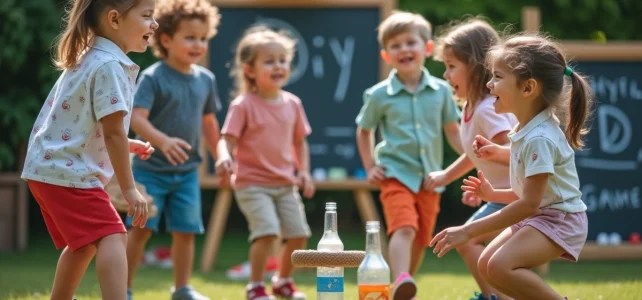
Banning plastic balloons doesn’t prevent the organization of attractive collective games. Some schools are now imposing a quota of reusable items for each activity planned during annual celebrations. Teachers note that students participate more when activities allow them to create their own materials from resources already available on-site.
At a time when budgets are tightening and environmental requirements are becoming part of every project, creative solutions are taking the lead. Far from stifling children’s enthusiasm, these alternatives transform constraints into a space for collective experimentation.
Why organizing an eco-friendly fair is increasingly appealing to schools and families
The waste-free fair is no longer an exception: it is carving out a prominent place in school agendas and attracting new followers each year. On the ground, parents and teachers agree to rethink the school celebration. Fatigue with plastic waste gives way to a desire to invent new ways to celebrate, craft together, and give meaning to every action. Making materials with what we already have on hand also conveys eco-responsible habits, and it starts early.
Organizational tips are pouring into parent exchange groups: selective sorting, creative workshops, stands reinvented from cardboard, bottle caps, or worn textiles… everything adds up. Everyone gets involved, collects, shares their tips, and adapts ideas to what is locally available. The school celebration thus becomes a wonderful space for informal education: learning to reduce waste, reuse, share, all while having fun.
For those who want to go further, reading on Le Petit Blog de Maman offers a range of very concrete examples of games and crafts, all designed from recovered resources. Fairs committed to a waste-free approach demonstrate a strong will: to connect conviviality, sobriety, and creativity without falling into a moralizing discourse. Each fair thus becomes a joyful laboratory, where collective inventiveness takes precedence over disposable consumption.
Which reclaimed materials to prioritize for truly responsible games and workshops?
Reinventing fair games involves carefully choosing materials to avoid simply shifting the waste problem. Wood emerges as a valuable ally, provided it is sourced locally and untreated. With this in mind, several options are available to you:
- boards, crates, workshop scraps, or pallets: perfect for building game stands, knockdown cans, or sturdy skill games.
Raw wood, without chemical varnish, ensures both durability and safety for children while limiting invisible pollution.
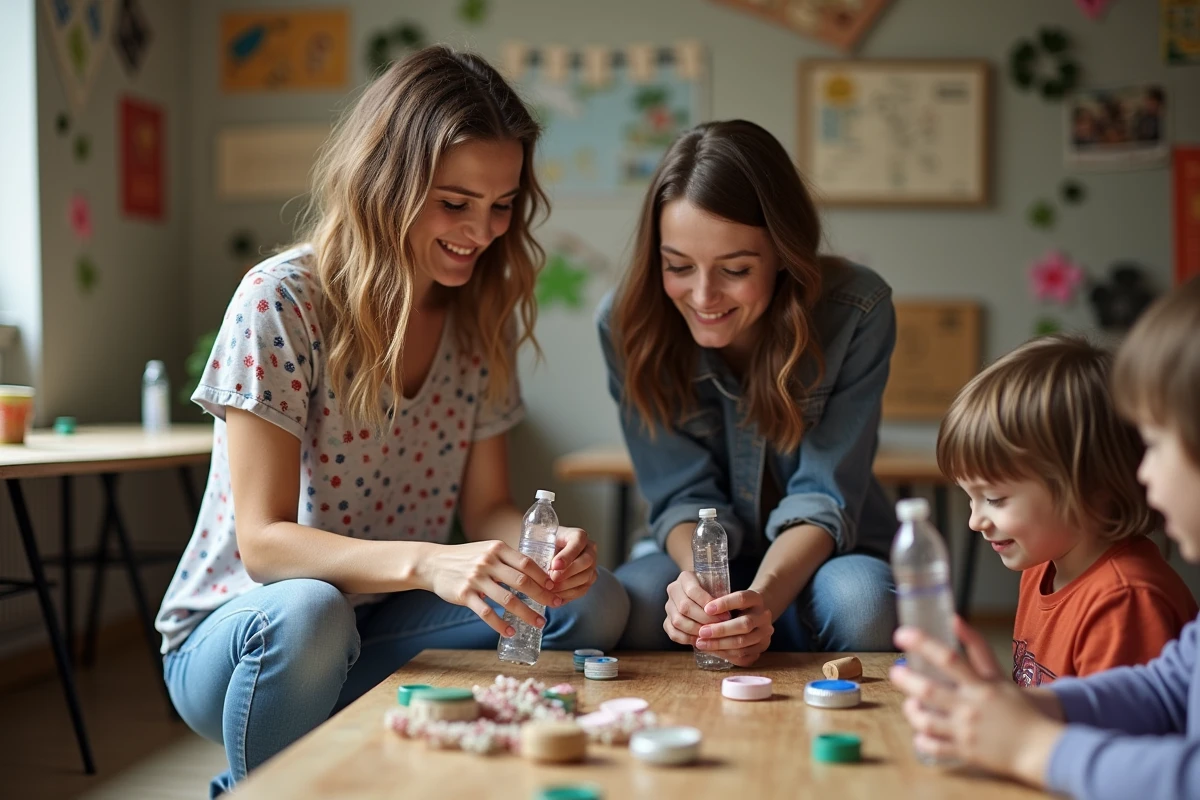
To replace plastic accessories, recyclable bottles and cardboard cups, collected in advance, find new uses: pins, musical instruments, elements for motor courses. Caps become game pieces or tokens, adding a welcome splash of color to the game tables. This simple sorting gesture gives a second life to everyday objects while stimulating children’s creativity.
Creative workshops gain richness with recycled paper or fabric scraps, often sourced from family closets. Origami, weaving, garlands—each activity becomes an opportunity to invent and instill a reuse reflex. To support these efforts, set up sorting bins near the stands: this is a concrete reminder of the meaning of the waste-free fair, while facilitating cleanup and waste management at the end of the day.
Dare to choose sustainable gifts: wooden items, second-hand books, second-hand gifts sourced from parent collections. The robustness, simplicity, and potential for reusing each homemade fair game become key selection criteria. This approach is long-lasting, ensures safety at each fair game stand, and places the celebration within a truly responsible framework.
Creative and easy ideas for DIY activities that rhyme with fair and ecology
Reinventing the classics with upcycling
Nothing is simpler than transforming the contents of a closet into playful supports. Take a shoebox: it can become a fishing stand or a target for skill games. Lonely socks? Perfect for creating puppets during an express workshop. Plastic bottles line up for homemade bowling, while color-sorted caps allow for a relay race or a sensory memory game. Recycled paper lends itself to all desires: garlands, notebooks, decorations—each sheet finds a new mission.
Giant wooden games and collective activities
Reclaimed wood invites big ideas. Mikado, dominoes, balance courses: each creation tells a small story of circular economy. A construction workshop allows children to assemble their own ring toss or marble maze. The idea? Focus on simplicity, sturdiness, and safety while leaving room for inventiveness.
Here are some activities that work every time at an eco-friendly school fair:
- Face painting stand: prioritize natural colors made from food ingredients.
- DIY jewelry workshop: paper beads, mismatched buttons, linen threads to create original bracelets.
- Fishing game: fish cut from cardboard, hand-decorated, to be caught with a homemade rod.
Waste management is integrated at every stage of the project. Set up visible sorting bins near the stands, educate children and their families to avoid single-use plastics, and highlight every action that steers the eco-friendly fair towards a truly responsible celebration. The result? Lasting memories, circulating ideas, and the desire to do it all over again together next year.