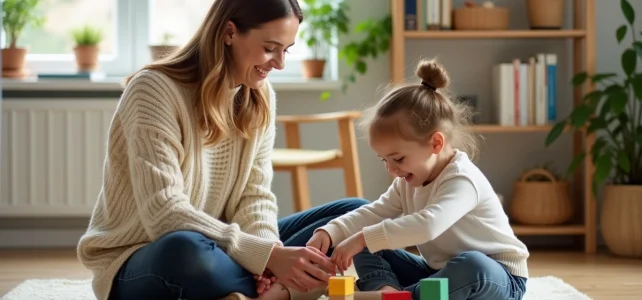
A child who refuses to get dressed in the morning, a teenager locked in silence at dinner, an exhausted parent doubting their choices: these situations are common in most households. Supporting parents on a daily basis is not about giving them a list of rules to follow; it’s about providing them with concrete guidelines to adjust their approach to specific difficulties.
Isolated parents in rural areas: breaking isolation through parental circles
Have you ever noticed how parenting advice assumes you live near a big city, with structures accessible on foot? For an isolated parent in a rural area, the reality is very different. No daycare nearby, no evening support group, sometimes no transportation.
Read also : Tips and News for Making the Most of Life After 60
Scandinavian models offer an interesting approach. In Sweden and Denmark, community parental circles in rural areas have been established for several years. The principle: regularly gather parents from the same geographical area, with a trained facilitator, to share experiences and co-create solutions. Feedback shows a qualitative improvement in family ties within participating groups.
In France, associative initiatives replicate this format on a smaller scale. Online platforms also allow parents to join exchange groups, as can be done via https://www.club-des-parents.com/, which facilitates connections between families facing similar issues.
See also : How to Start Investing in the Stock Market: Essential Tips for Motivated Beginners
The key takeaway: a parent supported by their peers makes better decisions for their child. Mutual aid is not a luxury reserved for urban families.
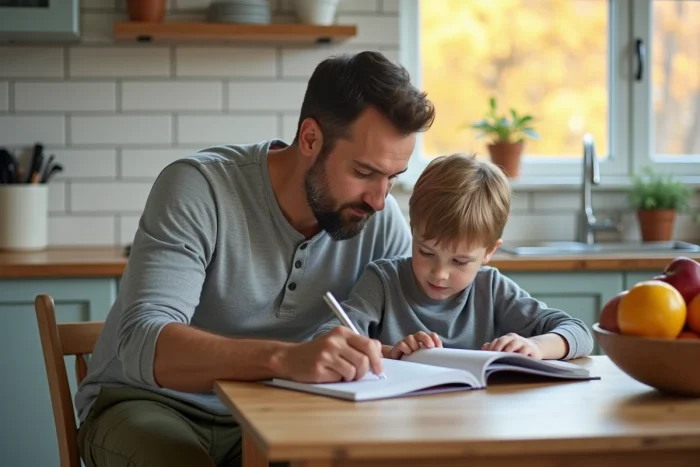
Parent-child communication: going beyond simple active listening
Active listening is often presented as the solution to all family conflicts. Rephrasing what the child says, validating their emotions, nodding in agreement. It’s a good starting point, but it’s not enough.
Naming emotions before resolving them
Let’s take an example. A six-year-old child is crying because their tower of blocks has collapsed. The reflexive reaction: “It’s okay, you’ll rebuild it.” This phrase denies the emotion felt.
A more effective approach is to describe what you observe without interpreting. “Your tower fell down, and you had spent time on it.” The child feels understood even before a solution is offered. This approach also works with teenagers, who are more likely to reject direct advice than factual observations.
Adapting the channel according to age
With a three-year-old, communication happens through play and body language. With a pre-teen, it often occurs during informal moments: a car ride, a shared activity. The most fruitful conversations rarely happen when scheduled.
Some concrete guidelines:
- Before age six, favor short sentences and closed choices (“Do you want the blue sweater or the red one?”) to limit frustration related to language
- Between ages six and ten, ask open questions about specific situations rather than abstract feelings (“What happened at recess?” instead of “How do you feel?”)
- In adolescence, accept silence as a form of communication and allow the young person to initiate the exchange
Hybrid family therapy: a game-changing format
Family therapy sessions have long relied on a single format: in-office appointments, the whole family present, one hour per week. This model poses practical problems for many households.
In recent years, hybrid protocols combining online sessions and in-person meetings have been developing. According to a longitudinal study by INSERM published in 2026, families that adopted this format observed a decrease in family conflicts compared to previous years.
The hybrid format offers several advantages for family life:
- Video sessions allow for the inclusion of a parent absent from home (separation, work travel)
- In-person appointments remain available for situations requiring direct mediation
- The overall cost decreases, making follow-up accessible to more families
This is not a miracle solution. Some conflicts require the physical presence of the therapist to observe non-verbal dynamics. The hybrid approach works better as a complement than as a total replacement.

Emotional health of parents: a often overlooked angle
The majority of resources on parenting focus on child development. The well-being of the parent themselves is treated as secondary, even though it conditions everything else.
A parent in emotional exhaustion cannot maintain a caring communication. Their ability to regulate their own reactions decreases, leading to tense interactions with the child. Caring for one’s own emotional health is a direct parental act, not a selfish luxury.
Concretely, this can involve regular micro-breaks rather than a large annual “break,” maintaining at least one personal activity per week, or participating in a peer support group. The strongest parenting strategies rely on adults who allow themselves to ask for help.
Family flourishing does not stem from a single method applied to the letter. It is built through daily adjustments, communication tailored to each age, and the parent’s ability to recognize their own limits. Families that make the most progress are often those who accept to seek support before they absolutely need it.