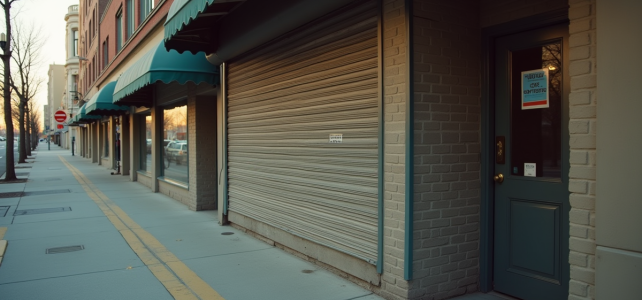
In 2023, the number of judicial liquidations in the retail sector reached an unprecedented level in ten years, according to the Banque de France. Some brands maintain stores in high purchasing power areas, while others prefer to cease all physical activity to focus their efforts on online sales.
Closure decisions often come after several years of declining revenue, with no possibility to renegotiate rents or pass inflation onto prices. Behind every drawn curtain, jobs are at risk and the local offering diminishes for residents.
Why are we witnessing a wave of closures in local shops?
In the clothing sector, the dark streak continues. Struggling businesses are piling up, caught in an economic vise that is tightening. On one side, fixed costs, commercial rents, and charges remain high, while revenue is dwindling, a victim of persistent inflation that hampers consumption. On the other side, the abrupt shift to new shopping habits, accelerated by the health crisis, has disrupted the balance of physical stores.
Over the months, the ready-to-wear sector has been shaken by judicial liquidations and a cascade of recoveries. Brands, already weakened by fierce competition and increasingly thin margins, have not withstood the shock. Even well-established brands in city centers have not been spared. Seeing the growing list of closed shops has become commonplace, revealing the depth of the commercial malaise.
Several reasons combine to explain this phenomenon:
- The rising cost of energy and raw materials weighs heavily on profitability.
- Changing consumption patterns: some customers are turning to other priorities, sometimes shunning traditional shops.
- Declining foot traffic in stores across France, particularly in clothing, where the drop in visits is becoming palpable.
For many, judicial liquidation ultimately becomes inevitable. Closing shop is no longer an anomaly but an increasingly common choice, radically changing the face of our city centers. Streets are lined with closed storefronts, and the impact of these closures lingers.
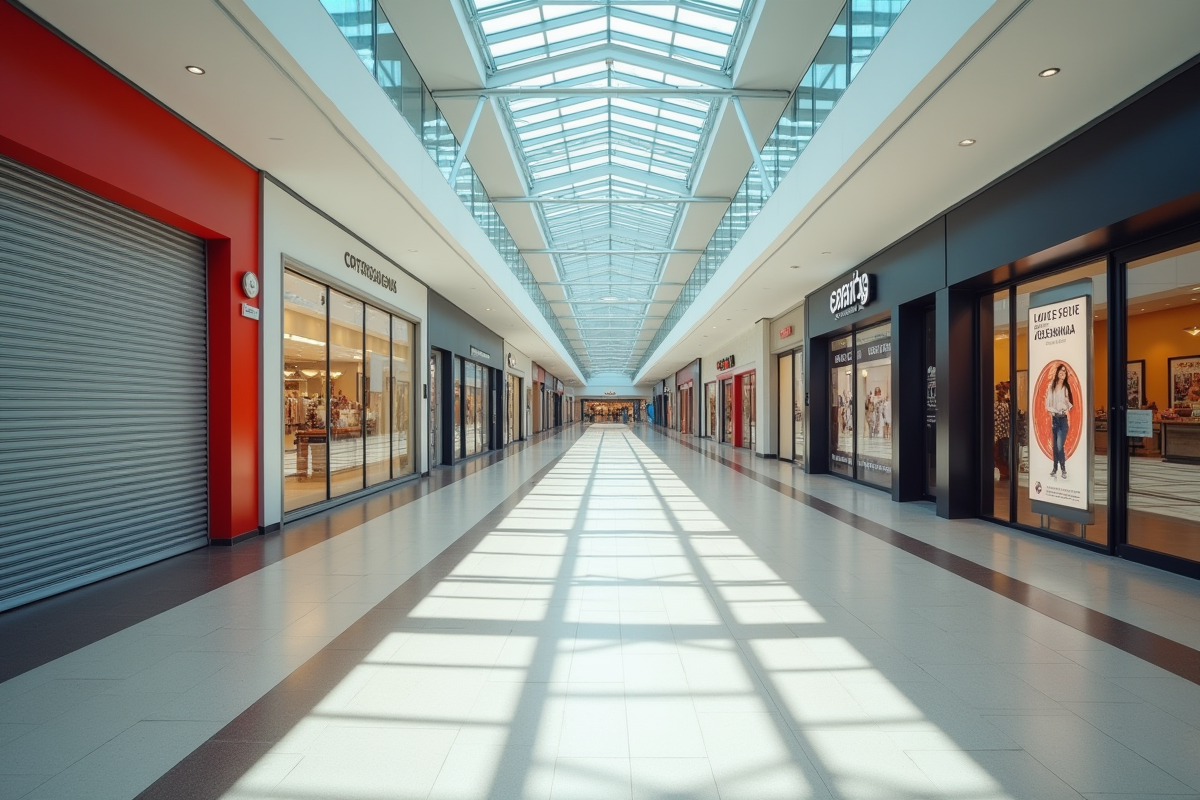
Between worries and hopes: how these closures are reshaping neighborhood life and customers’ daily lives
The closure of retail outlets does not leave anyone indifferent. Gradually, shopping streets are losing their vitality. Closed shutters are accumulating, and the desertification of city centers is setting in. Where shop windows once animated daily life, a social void is deepening. Consumers are searching for their bearings, and regulars feel deprived of their habits.
This transformation does not stop at the loss of a business. It also translates into the disappearance of jobs. When a store closes, employees find themselves out of work, forced to consider retraining, often supported by assistance programs but rarely spared from the difficulties of such a transition. Finding a place in the job market after such a rupture can sometimes be a daunting challenge.
The city center is gradually changing its face. Residents are denouncing the disappearance of local shops, speaking of a city that is losing momentum, a daily life that is losing its simplicity. Others are adapting their behavior, turning to online sales to fill the gap.
Here’s how daily life is being disrupted:
- Fewer products available immediately, complicating quick access to certain purchases.
- Physical stores served as landmarks, places of exchange: their absence alters habits and the relationship with the city.
In this transitional period, reactions oscillate between forced adaptation and resistance. Retailers are fighting back, streets are taking on a new look, and former customers recount how the neighborhood has changed. Habits are evolving, sometimes reluctantly, drawing a different urban map, quieter, and sometimes less welcoming. Closed shutters now tell a collective story, that of a commercial fabric to be reinvented.