
The home equipment market offers thousands of products in every category, from major appliances and furniture to heating systems. With so much choice, selection criteria vary depending on the layout of the home, household size and actual budget. Choosing equipment for your home means weighing technical factors (energy consumption, dimensions, repairability) against budget constraints that go beyond the purchase price alone.
Repairability and durability ratings: how labels can change your purchasing decision
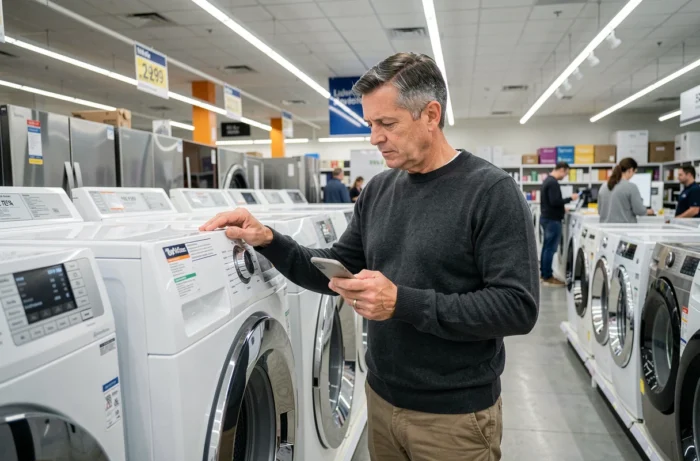
Since France introduced the repairability index, several categories of electrical and electronic devices have displayed a score out of ten. For washing machines and televisions, this index has evolved into a durability index that includes reliability and robustness criteria, not just ease of repair.
This score can directly affect the choice between a cheap appliance and a model built to last. A low-priced washing machine with a poor durability rating could cost more over five years than a more expensive model that is robust and repairable. The key is to compare the price against the estimated lifespan, rather than looking at the price alone.
When choosing equipment for your home, checking this rating before buying any major appliance can help you avoid premature replacement—the most underestimated expense in an equipment budget.
Equipment budget by room: where to spend and where to wait
Not all equipment is equally urgent or costly. The kitchen and bathroom take up the largest share of the budget, while the living room and bedroom can be furnished gradually.
Kitchen and appliances: the top priority
The refrigerator, cooktop and oven are the essentials. Without them, a home is not practical for everyday living. These are also the appliances whose energy labels have the greatest impact on your monthly bills.
Buying an energy-hungry refrigerator because it costs less upfront often means paying the difference in electricity bills over three to four years. It is better to invest in these essentials first, even if that means putting off buying a stand mixer or coffee machine.
Heating and energy: a long-term commitment
Heating is a home’s largest source of energy consumption. In a new home subject to RE2020 regulations, heat pumps dominate the market. For an existing home, the right choice depends on insulation, the current system and the energy renovation grants available.
These grants change regularly. Before including a heating system in your budget, check the eligibility requirements at the time of purchase—this precaution could save you several thousand euros. The rules can vary from one six-month period to the next.
Furniture and comfort: what can wait
Living room furniture, shelving and decor do not affect energy bills or whether a home is habitable. These are the easiest expenses to spread out over time. A second-hand or refurbished piece of furniture serves the same purpose as a new one for a fraction of the price.
Repair rather than replace: using the repair bonus to manage your budget
The repair bonus applies to many electrical and electronic products, provided you use a QualiRépar-certified repairer. This scheme reduces repair costs and changes the financial equation when deciding whether to replace an appliance.
Before throwing away a broken appliance, check whether it qualifies for the bonus and whether a QualiRépar repairer operates nearby. This could save you the cost of a new appliance. The same applies to small appliances, televisions and laptops.
This focus on repair also affects your initial purchasing strategy: an appliance with a good repairability rating will cost less to keep in working order. The purchase price tells only part of the story.
Prioritization checklist: what order should you buy your equipment in?
The order of purchase depends on the type of home (new or older, furnished or unfurnished) and the number of occupants. A simple framework can help you avoid impulse purchases that strain your budget in the very first month.
- First: appliances and items the home needs to function (refrigerator, cooktop, bedding, basic lighting). These purchases are essential, but you can compare energy labels and durability ratings.
- Next: comfort equipment that affects energy use (washing machine, water heater if one is not provided, additional insulation). Refurbished products often offer better value for money than entry-level new models.
- Then: decorative furniture, secondary appliances (robot vacuum, tumble dryer, small kitchen appliances) and decor. These purchases can be spread over several months and are not urgent.
This order is not universal. A household with a newborn may prioritize a washing machine in the first week. A couple without children may manage for a few weeks by using a laundromat. Tailor your purchasing order to your household’s needs rather than following a standard list that may not suit anyone.
Check the information displayed before completing a purchase
Information about repairability displayed in stores or online should be cross-checked rather than taken at face value.
Consulting independent databases that compare manufacturers’ repairability scores can help you tell a genuinely good score from an overly optimistic rating. It takes just a few minutes and could change your final decision, especially when spending several hundred euros.
Equipping a home is about more than adding up list prices. Actual lifespan, energy consumption, access to public grants and the option to repair rather than replace all make for a more reliable calculation than the price displayed on the shelf alone.