A fake gold Napoleon on the market may present a weight, diameter, and thickness that conform, while concealing a carefully chosen alloy designed to deceive even the most precise scales. Some counterfeits, produced with modern industrial techniques, even manage to imitate the patina, wear, and details of the relief.
In France, the manufacture or possession of counterfeit coins is a crime severely punished, yet their presence continues to rise, including on reputable platforms. Experienced collectors know that authenticity relies on a series of methodical checks, where even the slightest negligence can be costly.
Recognizing a genuine gold Napoleon coin: unmistakable signs
The market for Napoleon coins has never been riskier for numismatics enthusiasts. Before diving in, one must carefully examine each physical characteristic and the distinctive marks that establish the reputation of genuine Napoleons. For instance, the weight of a 20 franc coin should exactly display 6.45 grams, and the diameter should span 21 millimeters. Any deviation, even slight, should immediately raise caution.
The official stamps, these tiny engraved marks, carry decisive clues about the purity of the gold and the issuing workshop. One often encounters the Saint-Jacques shell, the eagle, or sometimes the inscription “God protects France” depending on the year of minting. Whether it’s Napoleon’s profile, the “Marianne Coq,” or the bust of Louis XVIII, each historical period imposes its style, a diversity that counterfeiters find hard to replicate faithfully.
The secret also lies in examining the relief. A true Napoleon is recognized by the precision of its face, the sharpness of the letters, and the nuanced wear that is anything but artificial. Its patina remains soft, never gaudy. A glance at the reverse should confirm: the typography, the year, the mention “francs” allow for no approximation.
To easily identify a genuine gold Napoleon without error, other practical tips are to be discovered on Rennes en commun 2020. Seasoned collectors never rely on chance: the eye, the precision scale, and knowledge of historical periods remain their most reliable weapons against the proliferation of fakes.
How to distinguish an authentic gold Napoleon coin from counterfeits?
On the market, the authentic Napoleon coin stands out at first glance for those who know how to observe. The fake coins often reveal their imposture through rough engraving, an overly smooth surface, or sloppy details. The finesse of the bust, the regularity of the edge, and the clarity of the inscriptions are all clues to detect a counterfeit.
Weigh the coin: a Napoleon 20 francs must precisely display 6.45 grams on a precision scale, with a diameter of 21 mm. Even a minimal variation should raise alarms: the density of gold, much higher than that of the alloys used by counterfeiters, makes this test essential.
To refine your analysis, several checks should be considered:
- Examine the stamps: these small signatures, sometimes discreet, confirm the origin and purity of the gold. A dubious, faded, or misplaced stamp should raise concerns.
- Observe the condition: natural patina and authentic wear marks illustrate a coin that has genuinely circulated. Conversely, a face that looks too new or uniformly matte is suspicious.
- In case of doubt, use XRF tests: this non-destructive analysis method reveals the exact composition of the metal and uncovers deceptive alloys.
To further secure your purchases and limit risks, the context plays a decisive role: the provenance of the coin, detailed history, certificate, and transparency of the seller. If suspicion persists, the opinion of an expert becomes essential. Physical authenticity tests and constant vigilance form the best defense when money sharpens all desires.
First steps to take at home and when to consult a professional
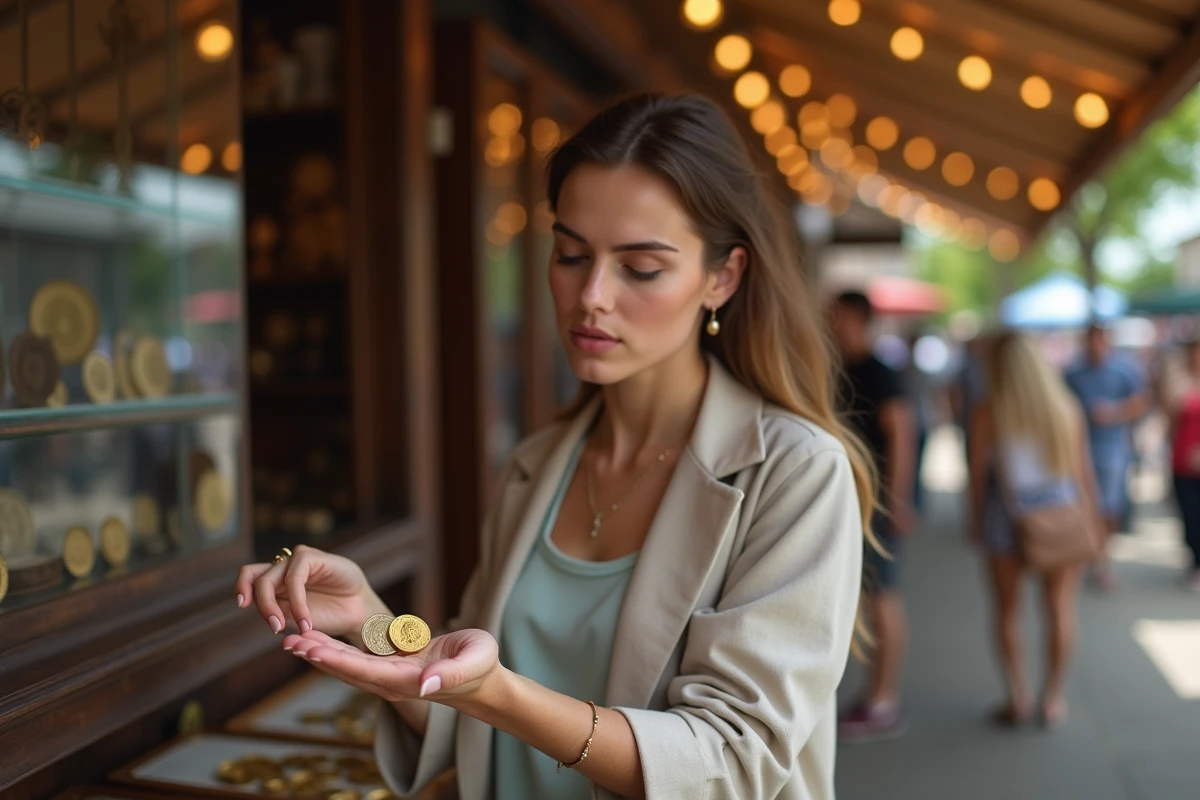
Upon discovering a Napoleon coin recently acquired or found, take the time to examine it thoroughly. Start by checking the weight on a precision scale; any anomaly will be obvious. Check the diameter and compare it to the standard: the slightest variation should raise suspicion about its authenticity.
Equip yourself with a magnifying glass to inspect the surface. The bust, the imperial symbols, the Saint-Jacques shell, or the inscription “God protects France” should be clear and sharp. A blurry outline, hesitant relief, and the suspicion of a counterfeit gain weight.
To ensure preservation and traceability, certain reflexes are essential:
- Keep all purchase receipts carefully: invoice, certificate of authenticity. They protect you during resale or when dealing with authorities.
- Do not intervene on Napoleon coins: the original patina is more valuable than an artificial shine.
At the slightest doubt, do not remain alone in uncertainty: consult an expert. Their diagnosis is crucial if the coin raises a question, if its value is high, or if the investment concerns multiple pieces. A professional has the tools and experience to authenticate, issue a certificate, evaluate the market, or assist in any buy-sell transaction. In a world where both collectors and investors seek security, the demand does not yield.
Between caution and expertise, each Napoleon coin deserves to be viewed as a witness of the past, provided one never lets their guard down against the illusion of the fake.