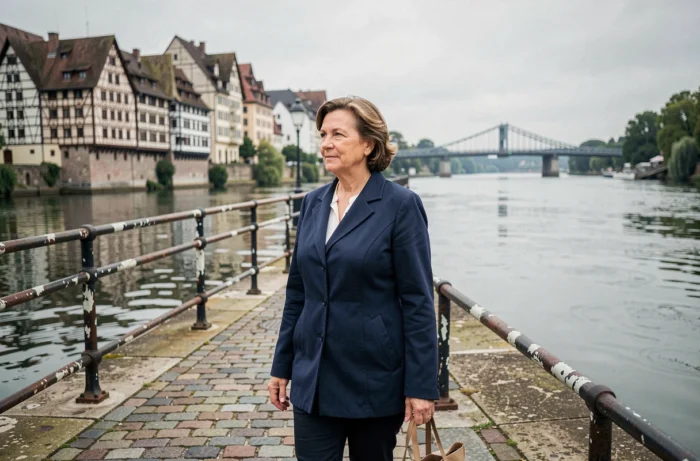
The Rhine shapes daily life in dozens of Alsatian municipalities, from river freight to cross-border energy projects. In November 2026, several local issues highlight tensions between economic development, the ecological transition and public participation. The river’s level, still low after a prolonged period of low water, disrupted freight transport for several weeks. Meanwhile, lithium extraction and Franco-German energy cooperation projects are moving forward, sometimes against the wishes of local elected officials.
Rhine river freight: when water levels dictate the local economy
Before water levels began to rise gradually in mid-November 2026, boats on the Rhine were operating with greatly reduced loads. This physical constraint has a direct impact on businesses and residents throughout the valley.
Rail transport provided a partial solution to make up for the volumes lost on the river. Occasional fuel shortages were reported at some service stations, a reminder that the Rhine remains a logistics corridor on which regional supplies depend.
For riverside municipalities, these episodes raise a question that is rarely discussed publicly: who bears the extra cost of shifting transport to rail or road? Local authorities, carriers or end consumers? Following CC Rhin news offers insight into how these issues play out at the intermunicipal level, from budget decisions to logistical adjustments.
Lithium project in Durrenbach: an unfavorable opinion that settles nothing
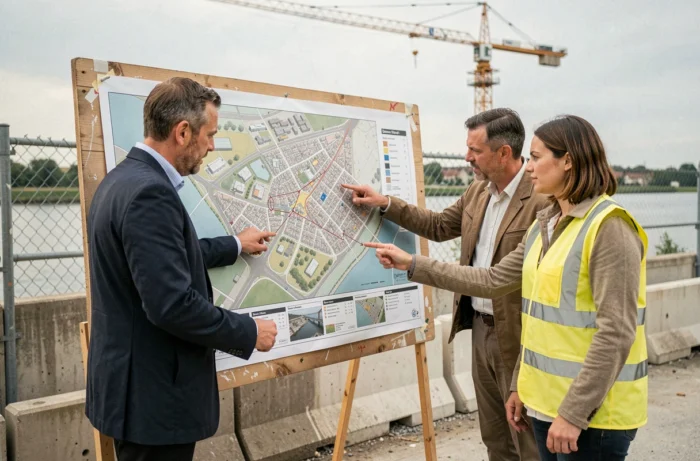
The Sauer-Pechelbronn community council voted against the environmental permit application submitted by Lithium de France for a geothermal-powered extraction project in Durrenbach, in northern Alsace. The vote, made public in November 2026, brought local concerns about environmental impacts and the management of underground resources to a head.
The issue is that the community council’s vote is advisory. The final decision rests with the prefect, following a review of the application and a public consultation. Local officials’ views carry weight in the debate, but they do not amount to a veto.
What the Durrenbach case reveals about local governance
This case highlights a common disconnect in major Rhine projects. Municipalities bear the potential nuisances—truck traffic, risks to groundwater and changes to the landscape—while having only limited say over the decisions that shape them. The public consultation, held as part of the prefectural review, remains residents’ main opportunity to make their voices heard.
The question of Alsatian lithium extends beyond the local level. It is part of the national strategy to secure supplies of critical raw materials. The municipalities concerned are left to weigh issues that extend beyond their control against consequences they will experience directly.
Cross-border cooperation in the Upper Rhine: energy and transport projects put to the test
Two programs launched in 2026 in the Upper Rhine region deserve particular attention because they are putting tangible resources to work on the ground across the Franco-German border.
- FAIR’nRG aims to help households with solar panels better manage their energy production, consumption and storage. The program targets households on both sides of the Rhine, offering management tools tailored to local grids.
- eTruckCharge aims to make it easier for heavy goods vehicles to access cross-border charging stations. The challenge is as much logistical as it is technical: an electric truck crossing the Rhine must be able to recharge without taking a detour, whichever bank it is on.
- Roadworks planned between Marckolsheim (France) and Sasbach (Germany) will temporarily affect cross-border travel, adding another constraint for carriers and cross-border commuters in the area.
These pilot projects are experimental. Their large-scale rollout depends on results that will not be available for several months. Local authorities are involved in their governance, but funding comes largely from European programs, raising questions about their long-term viability once subsidies end.
Ecological restoration of the Rhine: a critical review and greater ambitions
Restoring the Rhine involves more than replanting riverbanks. Reviews of past projects show that some measures have not delivered the expected benefits for biodiversity or river dynamics. This critical assessment, documented by regional stakeholders, is informing discussions about which approaches to prioritize going forward.
The stated ambition is to step up efforts, but several aspects of how this will be done remain unclear. Which stretches will be prioritized? How will ecological restoration be balanced with maintaining river traffic, given that the Rhine must remain navigable for freight? Data is lacking on the total cost of upcoming projects and how it will be shared between the state, local authorities and European funds.
Involving riverside residents in environmental decisions
As with lithium and energy, residents’ participation in this area remains governed by formal consultation procedures. Public inquiries are held, but their actual influence on final decisions is difficult to assess. Rhine municipalities often find themselves reacting rather than helping shape projects led by national or cross-border operators.
Local news from the Rhine in November 2026 paints a picture of major projects—freight, lithium, energy and ecology—converging in the same area, with timelines and decision-making processes that do not always align. Riverside municipalities bear the constraints without always having a say in the choices. This is probably the clearest thread to follow in the coming months, beyond program announcements and advisory votes.