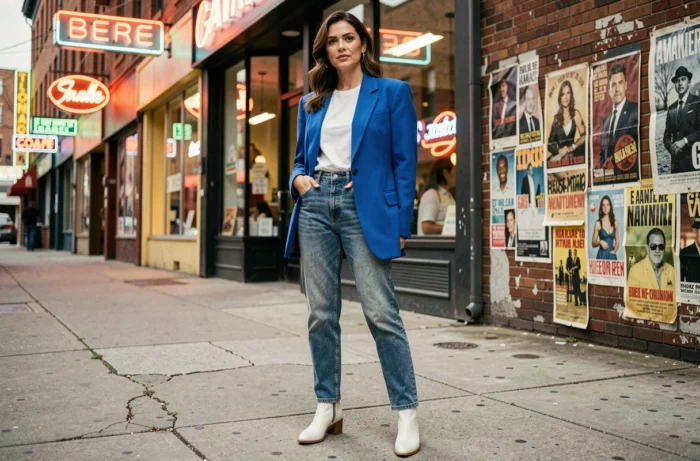
The 1980s do not form a uniform aesthetic block. Behind the cliché of neon colors and shoulder pads lie several distinct currents, from power dressing to pastel tones inspired by Miami Vice, not to mention sportswear and avant-garde Japanese silhouettes. Understanding these subcultures allows one to draw from 80s fashion without falling into costume.
Fashion Subcultures of the Eighties: Much More Than Neon
Have you ever noticed that two people dressed in “80s style” can wear radically different outfits? That’s normal. This decade produced at least five parallel aesthetics, each linked to a specific cultural universe.
First, power dressing, with its structured suits and pronounced shoulder pads. This style reflected the massive entry of women into leadership positions. The silhouette was architectural, with sober or bold colors, never pastel.
On the opposite end, the Miami Vice influence popularized soft tones (powder pink, sky blue, off-white) worn in relaxed cuts. Linen blazers, t-shirts under jackets, loafers without socks: a style that targeted a nonchalant elegance, almost summery all year round.
Glam rock extended the legacy of the seventies with shiny materials, leather, studs, and bold makeup. Sportswear transformed gym clothes into streetwear: leggings, headbands, leg warmers, and colorful sneakers emerged from gyms to invade the streets. Finally, Japanese designers from the avant-garde scene offered deconstructed volumes and dark shades, completely counter to the surrounding neon.
When talking about 80s style, identifying the subcurrent that attracts you avoids the caricatured costume. An oversized pastel blazer does not belong to the same vocabulary as a studded perfecto.
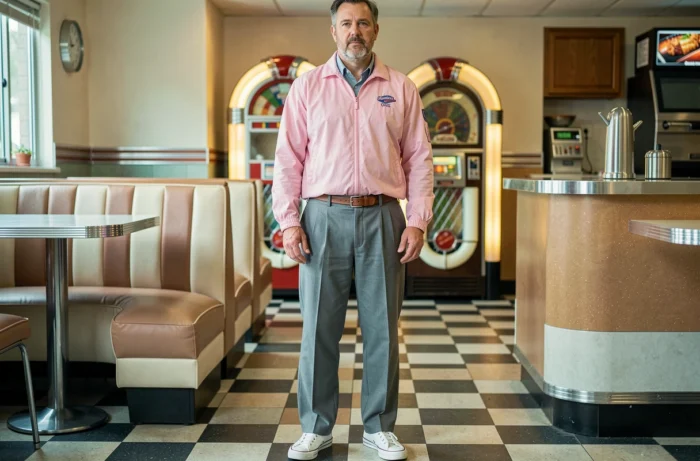
To delve deeper into each current and its key pieces, the trends on Breizh-Zelande detail the iconic silhouettes of the decade with concrete visual references.
Colors and Materials of the 80s: A Visual Grammar to Decode
The colors of this era followed a simple logic: attract attention. But the palette was richer than one might think.
- Neon and fluorescent: acid green, bright pink, electric orange. Reserved mainly for sportswear and evening outfits, rarely worn in total looks on a daily basis.
- Sophisticated pastel: lavender, mint, peach. Associated with the Miami Vice aesthetic and summer office attire, they provided a more refined effect.
- Black and metallic: black leather, silver and gold sequins dominated the glam rock wardrobe and nightlife outings.
- Faded denim: from pale blue to gray, ubiquitous denim appeared in jackets, skirts, dresses, and high-waisted pants.
In terms of materials, the decade mixed synthetic (lycra, shiny polyester, vinyl) with natural (thick cotton, linen, real leather). Lycra made the form-fitting silhouettes of sportswear possible, while structured fabrics supported the shoulder pads of power dressing.
Prints as a Signature
Geometric patterns, wide stripes, and animal prints (leopard, zebra) were strong markers. One bold print is enough to anchor an outfit in the eighties without accumulating references.
Wearing 80s Fashion Today Without Costume Effect
The current revival does not reproduce complete looks from the decade. It works by extraction: isolating a piece or detail to integrate it into a contemporary wardrobe.
Take shoulder pads, for example. Recent collections offer slightly structured shoulders, less rigid than the originals. The volume is suggested rather than imposed, making the piece wearable both at the office and in the evening.
Leg warmers illustrate another mechanism. They do not return as retro fitness accessories but through the balletcore trend, where they accompany long skirts or flowing dresses. The context changes, and so does the piece.
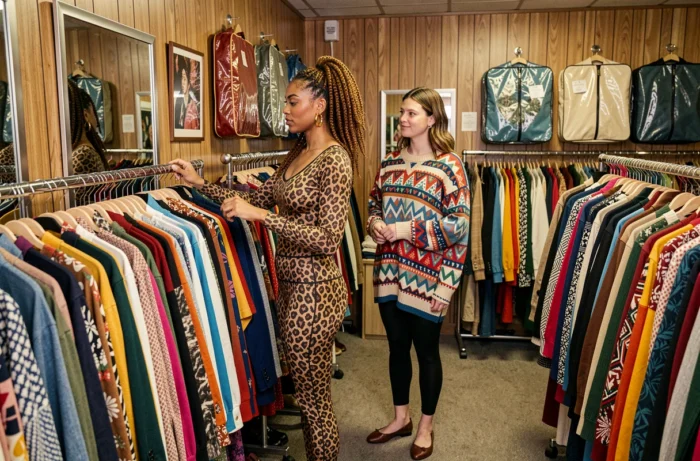
The same logic applies to oversized jeans. In the 80s, they were worn with a denim jacket and high-top sneakers. Today, they are paired with a fitted top and minimalist accessories. The contrast of volumes replaces accumulation.
Three Guidelines for Balance
Unsure about the line between homage and costume? Keep these principles in mind.
- One strong piece per outfit: a shoulder-padded blazer or high-waisted pants, not both together.
- Bright colors on a neutral background: a neon top works better with raw denim than with neon leggings.
- Contemporary accessories: a slim watch, a structured current bag, and understated shoes anchor the look in the present.
The total 80s look works for a themed party, not for the street. Selecting a unique element creates a citation effect, perceptible yet controlled.
Forgotten Pieces of the 80s That Deserve a Comeback
Competitors often talk about shoulder pads, neon, and the perfecto. Other pieces from this decade remain underutilized.
The abstract print wrap dress, for example, offered a flattering silhouette without shoulder pads or excessive volume. Lavallière collar shirts, often in satin, added a sophisticated touch to women’s office wardrobes. These garments reflect the understated elegance of the eighties, far from the spectacular.
The pleated trousers, very present in the men’s wardrobe of the time, are making a comeback in current collections. Their high cut and fluid drape create a structured silhouette without resorting to shoulder pads. For women, the high-waisted pencil skirt in a bright color remains a adaptable classic.
80s fashion is not limited to its most eye-catching pieces. Outfits from this decade also worked through precise cuts and texture combinations. Incorporating a structural detail (a pleat, a collar, a widened armhole) often yields a more interesting result than relying solely on color.